
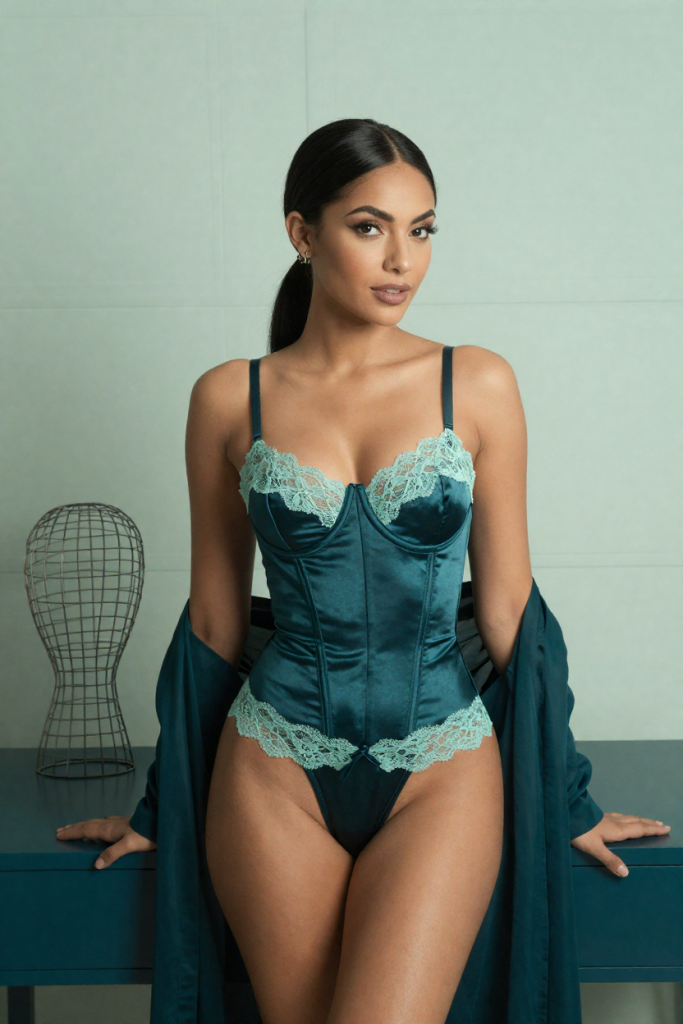
Every maker keeps frames they should have culled, because the only judge applied was a feeling. A short fixed checklist is stricter and quicker: five checks, run the same way every time, against the written record you made before the session began.
The five checks
1. Likeness. Is she the character on the record — same hair, same face, same signature — or a near relative? Judge against the record, never against the previous frame, because drift compounds quietly.
2. Hands. Hands first, then joints, then anything the pose bends. A frame can survive soft detail; it cannot survive anatomy the eye trips over at thumbnail size.
3. Light. One source, behaving the same way across skin, fabric and background. Light that argues with itself is the most common reason a strong frame feels vaguely wrong.
4. Edges. Hair against background, fingers against props, lace against skin. Clean edges let a frame sit beside others without announcing how it was made.
5. Purpose. Does the frame do the one job it was briefed for? A beautiful frame doing the wrong job fails here, and rightly.
The threshold that saves money
Score each check out of two. A frame needs eight of ten before finishing money is spent on it — an edit at 21 credits, a swap at 26, an upscale at 61. Below eight it returns to the generator at the 6-credit standard cost, where correction is cheapest. Keep the scores with the set, dated; a month later they will tell you which habit actually improved.